Sunday, 29 January 2017

“I’d put my money on the Sun & solar energy” – Thomas Edison


Thomas Alva Edison in 1911
Credit: Alevo

If the insight in the quote in the title makes it look like a modern fabrication, there is evidence that it was only one of the insights in a conversation between three extraordinary minds: Thomas Edison, Henry Ford & Harvey Firestone. All three seemed to understand that fossil fuels are a finite resource, & wind, solar & tides are suitable replacements.

The conversation took place in March 1931 – shortly before Edison's death on 18 October 19311 – apparently without a knowledge of the impact of fossil fuels on climate. Although discovered in 1896,2 the role of carbon dioxide in climate was ignored until well after the time of the conversation between Edison, Ford & Firestone.

Quote Investigator – “I’d Put My Money on the Sun & Solar Energy”
https://quoteinvestigator.com/2015/08/09/solar/
__________

1 Wikipedia: “Thomas Edison”, https://en.wikipedia.org/wiki/Thomas_Edison

2 S.M. Enzler MSc, “History of the greenhouse effect & global warming”, http://www.lenntech.com/greenhouse-effect/global-warming-history.htm
/ We are like tenant farmers chopping down the fence around our house for fuel when we should be using nature’s inexhaustible sources of energy sun wind and tide Firestone responded that oil and coal and wood couldn’t last forever They’d been tackling rubber He wondered how much hard research was going into harnessing the wind for example Windmills hadn’t changed much in a thousand years Ford said there were enormously powerful tides for example the Bay of Fundy Scientists had only been playing with the question so far Edison said I’d put my money on the sun and solar energy What a source of power I hope we don’t have to wait till oil and coal run out before we tackle that. I wish I had more years left /

Saturday, 28 January 2017

Tesla to begin enabling fully autonomous driving in "3 months maybe, 6 months definitely"


Credit: Motor Trend/EV Annex

Tesla announced on 19 October last year, that they had begun fitting all vehicles produced with the hardware for fully autonomous driving. At the same time, they announced that full autonomy would not be enabled initially, in the interests of gathering statistics about human performance, for subsequent comparison with fully autonomous vehicles.1

Something similar appears to have been used to gather the stats demonstrating the 40% improvement in the crash rate after Autosteer was enabled in Tesla vehicles.2

In an exchange of tweets, Elon Musk has provided a little more detail on the timetable.


This promises to make good on his prediction, in October last year, “Our goal is, & I feel pretty good about this goal, that we’ll be able to do a demonstration drive of full autonomy all the way from LA to New York, from home in LA to let’s say dropping you off in Time Square in New York, & then having the car go park itself – by the end of next year.”3

Electrek – “Tesla to transition from ‘Enhanced Autopilot’ to ‘Fully Self-Driving’ as soon as ‘3 to 6 months’, says Elon Musk”
https://electrek.co/2017/01/24/tesla-enhanced-autopilot-to-fully-self-driving-says-elon-musk/

Forbes – “Musk Wants To Begin Shifting Teslas To ‘Full’ Self-Driving Capability Within 6 Months”
https://www.forbes.com/sites/alanohnsman/2017/01/24/elon-musk-targets-full-self-driving-capability-for-teslas-within-6-months/#1e70154779ee
__________

1 Hitchhikers’ Guide 2 Tech: “As of 19 October 2016, all Teslas produced will have the hardware necessary for fully autonomous driving (video)”, https://hhg2tech.blogspot.com/2016/10/as-of-19-october-2016-all-teslas.html

2 Hitchhikers’ Guide 2 Tech: “NHTSA report on fatal Tesla crash makes a strong case for Autopilot safety – update”, https://hhg2tech.blogspot.com/2017/01/nhtsa-report-on-fatal-tesla-crash-makes.html

3 Tech Crunch: “Musk targeting coast-to-coast test drive of fully self-driving Tesla by late 2017”, https://techcrunch.com/2016/10/19/musk-targeting-coast-to-coast-test-drive-of-fully-self-driving-tesla-by-late-2017/
/ Last year Tesla updated radar camera ultrasonic sensors electric cars CEO Elon Musk new hardware's capabilities would lag behind cars on the street already Musk has projected Hardware 2.0 cars surpass older generation Hardware 1.0 vehicles fully self-driving 3 to 6 months news owners Hardware 2.0 cars rollout Autopilot features over-the-air updates over the air updates bringing those models closer functionality older-hardware cars full self-driving capability features enhanced autopilot features Elon Musk arrival Autopilot newer cars behind schedule series tweets Musk slow rollout Autopilot features camera calibration software update buyers Tesla cars built after October 2016 newly updated hardware start surpassing old hardware soon Musk's plan two-tiered Autopilot system Hardware 1 cars capable of running Autopilot Hardware 2 cars feature Enhanced Autopilot Hardware 2 cars offer a fully self-driving system Autopilot Hardware 2-equipped cars fully self-driving option installed half of their sensors enabled possibility running Autopilot two different sets of cars Musk goal driverless Enhanced Autopilot fully self-driving trip Los Angeles New York small delay Autopilot rollout /

Friday, 27 January 2017

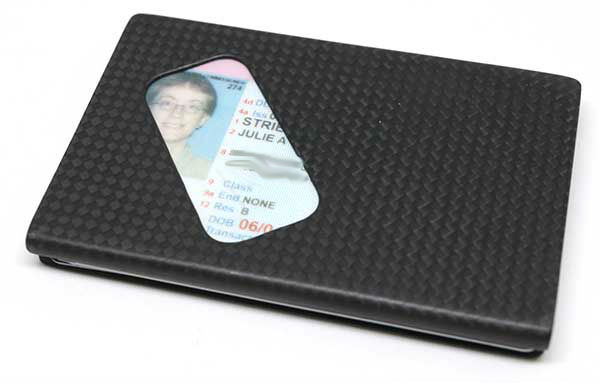
Identity – unique minimalist wallet


Identity card wallet
Credit: The Gadgeteer

Identity card wallet qualifies as a minimalist wallet by being only slightly wider & taller than a credit card, plus just 7 mm (0.28 inch) thick, before you start adding cards.

What sets it apart is
● aerospace-grade carbon fiber construction
● no provision for carrying cash
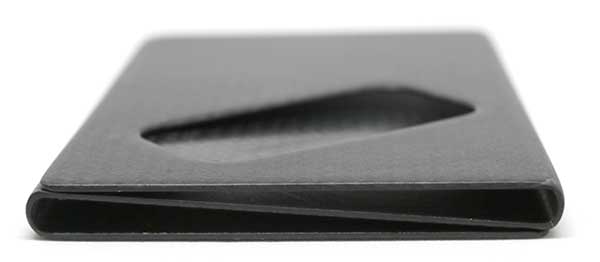
● most of all, its Z-profile construction


Identity card wallet Z-profile construction
Credit: The Gadgeteer


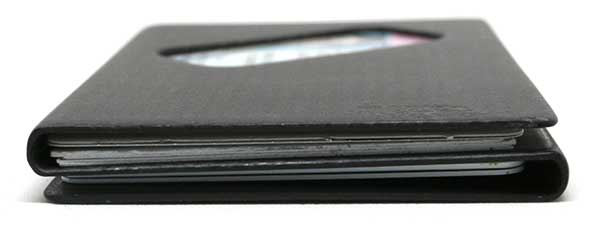
Identity card wallet with cards inserted
Credit: The Gadgeteer


The Gadgeteer – “Identity card wallet review”
http://the-gadgeteer.com/2017/01/26/identity-card-wallet-review/

Identity first appeared as a Kickstarter project
https://www.kickstarter.com/projects/798110330/identity-a-wallet-like-you-have-never-seen-before
/ Identity Card wallet review EDC quality item simple to use minimal minimalist how much space they take up never use cash anymore. When I buy something easier swipe credit card unzip wallet pull out the required cash receive change back wallets tend to be bulky accumulate extra stuff receipts other paper Identity Card wallet minimal wallet Identity Card wallet ultra small and ultra light weight light-weight lightweight minimalist wallet aerospace-grade aerospace grade carbon fiber unique folded one-piece design separate your cards into two piles wallet hold four cards on one side of the wallet and four cards on the other side wallet hold four cards on each side footprint almost the same size regular credit card smallest wallet I’ve found so far sides are smooth to the touch no rough edges Identity Card wallet offers wallet with or without a logo badge on the front crowdfunding campaign wallet logo badge offering it without the badge badgeless version edges of the logo cards that I carry in the Identity Card wallet several regular plastic credit cards along few thinner paper cards business cards held securely in place by the sides of the wallet cards inserted into the wallet still very thin diagonal cutouts on the front and back easy to slide out the top card with your thumb Identity Card wallet fits very easily into my pocket so thin that I barely even notice that it’s there zero bad things to say about the Identity Card wallet can’t use it to carry cash perfect wallet for minimalists /

Thursday, 26 January 2017

Not all of the news from the United States is bad (update)


California state Governor, Jerry Brown, speaking to the American Geophysical Union Fall​ Meeting (San Francisco 12-16 December 2016), on California’s plans to continue to act against climate change.


In the last few days (post Trump inauguration). Governor Jerry Brown, delivered the State of the State address, including a similar statement on climate change. To avoid lengthy procedural matters, the video starts playing at 19:30


If after watching the above, you are confused by the reference to, “alternative facts”, watch this


If the video above no longer works for you, try this:

/ President Trump President Donald J Trump climate change global warming science truth lies alternative facts state of the state address greenhouse gas carbon dioxide pollution /

Wednesday, 25 January 2017

Good news – renewables are now the largest source of installed power in the world!


Credit: The Brattle Group/Google

“Renewables have surpassed coal last year to become the largest source of installed power capacity in the world.” – International Energy Agency (IEA)

More good news – “Over the next five years, renewables will remain the fastest-growing source of electricity generation, with their share growing to 28% in 2021 from 23% in 2015.” – IEA

IEA – “IEA raises its five-year renewable growth forecast as 2015 marks record year”
https://www.iea.org/newsroom/news/2016/october/iea-raises-its-five-year-renewable-growth-forecast-as-2015-marks-record-year.html

Electrek – “Renewable energy overtakes coal as world’s largest source of power capacity”, https://electrek.co/2016/10/25/renewable-energy-overtakes-coal-as-worlds-largest-source-of-power-capacity/

Climate Council – “Historic milestone: renewables now largest source of installed power in the world”
https://www.climatecouncil.org.au/renewables-now-largest-source-of-installed-power-in-the-world
/ International Energy Agency significantly increasing five-year growth forecast renewables strong policy support key countries sharp cost reductions renewables surpassed coal become largest source installed power capacity in the world latest edition IEA’s Medium-Term Renewable Market Report renewables growing 13% more between last year’s forecast stronger policy backing United States China India Mexico forecast period costs expected drop by a quarter solar PV 15 percent onshore wind turning point renewables wind solar renewables more than half new power capacity around the world reaching record 153 Gigawatt GW 15% more than the previous year gains driven record-level wind additions 66 GW solar PV additions 49 GW half a million solar panels installed every day around world last year China accounted about half the wind additions 40% all renewable capacity increases two wind turbines installed every hour 2015 witnessing transformation global power markets led renewables center of gravity renewable growth moving to emerging markets Dr Fatih Birol IEA’s executive director many factors behind remarkable achievement more competition enhanced policy support key markets technology improvements climate change mitigation powerful driver renewables many countries cutting deadly air pollution diversifying energy supplies improve energy security play equally strong role growing low-carbon energy sources especially emerging Asia next five years renewables remain fastest-growing source electricity generation their share growing 28% 2021 23% in 2015 renewables are expected cover more than 60% increase world electricity generation over medium term rapidly closing the gap with coal generation from renewables expected exceed 7600 TWh by 2021 equivalent total electricity generation United States European Union put together today 2015 was an exceptional year grounds for caution policy uncertainty persists too many countries slowing down the pace of investments rapid progress variable renewables such as wind solar PV exacerbating system integration issues in a number of markets cost of financing remains barrier many developing countries progress in renewable growth heat and transport sectors remains slow needs significantly stronger policy efforts IEA two-speed world renewable electricity over next five years Asia takes the lead in renewable growth region’s fast-paced rise electricity demand China alone responsible 40% global renewable power growth represents only half country’s electricity demand increase contrast European Union Japan United States where additional renewable generation outpace electricity demand growth between 2015 and 2021 IEA report identifies policy market frameworks boost renewable capacity growth by almost 30% next five years annual market 200 GW by 2020 accelerated growth put the world on a firmer path to meeting long-term climate goals records for renewables projections growth over the next five years more optimistic Dr. Birol higher expectations remain modest huge untapped potential renewables IEA working with governments around the world maximize deployment renewables in coming years /

Tuesday, 24 January 2017

Vigo electric motorcycle from Eco Motorcycles UK


If the video looks good, check the specs

Specifications from the Eco Motorcycles web site1
Range 400 miles (640 km)
Battery Capacity 21 kWh
Life 250,000 miles (400,000 km)
Motor Power 90 kW (120 horsepower)
Acceleration 3.2 seconds to 60 mph (100 kmh)
Max Speed 180 mph (290 km/h)
Total Weight 350 pounds (160 kg)

And if you like the specs, you'll love the price:

Estimated Retail Price £7,999 (9,799 USD)1 [$13,160 Australian]
Special Price (for supporters) £5,999 (7,499 USD) [$9,866 Australian]

Just to put this in perspective, compare with a Zero Motorcycles SR ZF13.0

Zero SR ZF13.0 with 13.0 kWh battery2
Zero Battery 13.0 kWh
“City” speed range is quoted as 161 miles (259 km)
Highway, 55 mph (89 km/h) 98 miles (158 km)
Highway, 70 mph (113 km/h) 81 miles (130 km)
Top speed (max) 102 mph (164 km/h)
Top speed (sustained) 95 mph (153 km/h)

Note how the range of the Zero declines with speed. Scaling the 161 mile (259 km), “City”, speed range of the Zero to allow for the larger battery in the Vigo (21 kWh verses 13.0 kWh), suggests that the Vigo will have 260 miles (418 km),3 rather than the 400 miles (640 km) claimed by Eco Motorcycles.

City riding implies stop-start driving. Regenerative braking isn't 100%. Extraordinary distances can be covered on a straight, flat road at a constant, low speed, but such numbers aren't a useful guide to the distance a vehicle will cover, on a single charge, on a trip, or around town.

In addition to developing the Vigo, Eco Motorcycles is a retailer of Zero electric motorcycles. Their web site offers the Zero SR ZF13.0 for £13,500.

Is any of the above possible?

Price – Eco Motorcycles claims it has in development, a motorcycle with 160% of the battery for 59% of the price (44% at the “supporter” price) of the current competition.

Performance – Zero makes no claims re acceleration. Top speed of 102 mph is probably electronically limited to preserve range. Power quoted for the Vigo is 90 kW. Comparison with internal combustion motorcycles suggests a top speed closer to 150 mph,4 rather than the 180 claimed.

Range – even assuming the claim of 400 miles of range is at, “city”, speed, the claimed range of the Vigo seems to defy the laws of physics for any practical purpose.

What can we expect in the Vigo electric motor cycle?

Right now, nothing – the Vigo is, “currently in development”. If a commercial product did not eventuate, it would not be the first development project from a startup manufacturer to fail. But there is no doubt that battery prices will continue to fall for some time. A motorcycle with 21 kWh battery in the quoted price range may be possible within a few years.

Top speed & range on the other hand – given the specs, both are likely to be better than the Zero SR ZF13.0, but are not likely to equal the claimed 180 mph & 400 miles of range.
__________

1 Eco Motorcycles: “Vigo”, http://eco-motorcycles.co.uk/vigo

Update: Vigo’s web page has changed since this article was first posted. Best source of information previously included there, is now the Indiegogo page at


Indiegogo: “VIGO: Electric Motorcycle of the Future”
https://www.indiegogo.com/projects/vigo-electric-motorcycle-of-the-future/x/9010251#/


2 Zero Motorcycles: “Zero SR ZF13.0”, http://www.zeromotorcycles.com/au/zero-s-specs?model=sr


3 161 * 21 / 13 = 260

4 Wikipedia: “List of fastest production motorcycles”, https://en.wikipedia.org/wiki/List_of_fastest_production_motorcycles#Fastest_production_motorcycles

/ video check specs specifications Eco Motorcycles web site range 400 miles 640 km battery capacity 21 kWh battery life motor power 90 kW 120 horsepower acceleration 3.2 seconds 60 mph 100 kmh max speed 180 mph 290 km/h weight 350 pounds 160 kg specs price estimated retail price £7,999 $US9,799 USD $A13,160 Australian special price supporters £5,999 $US7,499 USD $A9,866 Australian Zero Motorcycles SR ZF13.0 Zero SR ZF13.0 13.0 kWh battery Zero Battery 13.0 kWh city speed range 161 miles 259 km highway speed 55 mph 89 km/h 98 miles 158 km highway speed 70 mph 113 km/h 81 miles 130 km top speed 102 mph 164 km/h range Zero scaling 161 mile 259 km city speed range Zero larger battery Vigo 21 kWh 13.0 kWh 260 miles 418 km 400 miles 640 km claimed Eco Motorcycles developing Vigo Eco Motorcycles retailer Zero electric motorcycles Zero SR ZF13.0 price Eco Motorcycles in development motorcycle 160% bigger battery 59% price supporter price current competition performance Zero acceleration power quoted Vigo 90 kW 73% greater 52 kW claimed Zero higher top speed top speed 73% more power aerodynamic drag increases as the square of the speed range claim of 400 miles range city speed claimed range Vigo seems to defy the laws of physics Vigo electric motorcycle motor cycle Vigo currently in development commercial product first development project startup manufacturer fail battery prices will continue to fall motorcycle 21 kWh battery quoted price range adjusted inflation likely to be possible within a few years top speed range specs specifications better than Zero SR ZF13.0 Eco Motorcycles Vigo Zero Motorcycles Zero SR ZF13 /

Monday, 23 January 2017

Note 7 fires – what Samsung found


Schematic of Samsung Galaxy Note 7 lithium ion battery
Credit: Samsung

Since recall of the Galaxy Note 7,1 96% of 3 million Note 7s have been returned globally. Hard to imagine why the remaining 4% haven't been returned, given their safety record, & the ongoing shutting down of service around the world.2,3

Investigations have included a large number of charge/discharge cycles on 200,000 Note 7 devices & 30,000 Note 7 batteries by 700 researchers. Underlying cause is short circuiting inside Note 7 batteries arising from manufacturing & product quality issues.

Storage capacity of a lithium ion battery, such as the one in your phone, depends substantially on the surface area of the electrodes. To this end, the electrodes are wound around each other, as shown in the diagram above. To prevent short circuits, they have a separator wound between them. Also present, but not shown in the diagram, is insulating tape.

Defects Samsung identified:
● bending of negative electrode by the battery case

● bending of negative electrode due to incorrect positioning in the curve at the thin side of the battery

● high welding burrs on the positive electrode causing it to penetrate the insulation tape (not shown in the schematic above) & separator causing an internal short circuit

● some batteries had missing insulation tape

More detail in the Samsung report – “Galaxy Note7: What We Discovered”, https://news.samsung.com/global/infographic-galaxy-note7-what-we-discovered
__________

1 Hitchhikers Guide 2 Tech: “Samsung pulls the plug on the Note 7”, https://hhg2tech.blogspot.com/2016/10/samsung-pulls-plug-on-note-7.html


2 ITNews: “Samsung is kicking Galaxy Note 7 users off Aussie telco networks”, http://www.itnews.com.au/news/samsung-is-kicking-galaxy-note-7-users-off-aussie-telco-networks-443170


3 Fortune – “Here’s How Samsung Will Disable Unreturned Galaxy Note 7 Devices”, https://fortune.com/2016/12/09/samsung-kill-galaxy-note-7/

/ Samsung internal short-circuiting internal short circuit batteries battery caused fires Samsung Electronics found internal short circuiting Samsung Galaxy Note 7 batteries caused phones heat up catch on fire catch fire Note 7 launched globally users reported batteries catching on fire Samsung announced global product replacement program swap problematic batteries problems continued device discontinued globally press conference headquarters Seoul South Korea president Samsung's mobile communications business DJ Koh apologised customers retailers business partners invested all efforts substantial resources analyse every aspect failure fully investigate the causes over 700 researchers engineers spent months analysing 200,000 Note 7 devices 30,000 Note 7 batteries devices batteries repeatedly charged discharged simulating incidents in the field incidents caused battery cell focus investigation batteries 96 per cent of 3 million devices sold activated globally returned Samsung conducted internal review independent reviews UL safety science organisation Exponent US-based consulting engineering firm TuvRheinland German-based company batteries sourced two suppliers presentation UL president consumer business Sajeev Jesudas organisation found assembly manufacturing issues batteries suppliers product quality issues batteries higher energy density batteries increase severity battery failure design manufacturing issues batteries field failures Note 7 devices Note 7 handsets lithium-ion batteries arranged in layers positive negative electrodes physical separator between short circuit battery cell damage separator Samsung says it won't happen again South Korean company improved its processes Samsung developed battery check protocol invited researchers academics provide analysis ensure battery safety /