Tesla is preparing for production of Model 3 (note that it's no longer spelled Model ≡ (check https://www.tesla.com/model3))
● production of current offerings (Model S & X) will shut down for a week, to prepare for production of the Model 3
● building of pre-production Model 3 units will begin on 20 February
Production is scheduled to begin in July of this year. When this was announced last year, anyone familiar with Tesla's performance against target dates was skeptical. However, pre-production beginning on 20 February is consistent with Model 3 production beginning on schedule.
Reuters – “Tesla pausing factory for Model 3 preparation this month” http://www.reuters.com/article/us-tesla-model-idUSKBN15N2W7/ Tesla Inc shut down production California assembly plant week prepare for production high-volume Model 3 sedan mass market company meeting target start production July Tesla brief, planned pause company add capacity existing paint shop prepare for Model 3 other general maintenance Tesla begin Model 3 production later this year planned start the ramp towards 500,000 vehicles annually 2018 Tesla spokesman pause material impact first-quarter production delivery figures added production days to compensate luxury electric carmaker planned begin test-building Model 3 20 February February 20 Tesla Chief Executive Elon Musk more than 370,000 customers deposits down Model 3 start building cars July 2017 analysts and suppliers timeline too ambitious difficult to achieve Tesla's history missing production targets Tesla starting pilot production factory Fremont California shareholders two days later reports fourth-quarter results Model 3 rollout stoke the fan base highly anticipated vehicles Tesla small number test assembly system quality of vehicle parts stoke the fan base Wall Street pre-production models earnings announcement Tesla's plans Tesla spokesman production schedule Elon Musk investors July 2017 startup target suppliers deadlines Tesla Model 3 government incentives sedan Tesla niche luxury player automotive sector Tesla $41.4 billion market capitalization equals Nissan Motor Co Ltd Elon Musk bold approach cars space exploration clean energy investor enthusiasm Tesla skeptics Elon Musk promise producing 500,000 cars per year by 2018 Tesla 373,000 refundable $1,000 deposits for Model 3 production total sales fully electric vehicles /
On the afternoon of Wednesday 28 September 2016, a once-in-50-year storm, with winds up to 130kph & more than 80,000 lightning strikes, occurred in South Australia. Direct damage included destruction of more than 20 electricity transmission towers. In addition, 3 items of critical distribution infrastructure were destroyed. Other items of infrastructure responded to protect themselves, as planned, by shutting down.
Result for South Australia residents, was a state-wide failure of electricity supply.
Coincidentally, at over 40%, SA is leading the nation in adoption of renewable energy.
Just to be clear – the loss of power in SA was totally unrelated to the source or capacity of generation. Failure occurred because of the loss of critical distribution infrastructure.
Unfortunately, some, mainly on the conservative side of Australian politics, saw this as an opportunity to attack renewable energy.
On 08 February 2017, a heat wave in South Australia led to a spike in demand, which forced, “load shedding”. At the time, gas power plant at Pelican Point, new Adelaide, was sitting idle due to a lack of foresight &/or planning by the Australian Energy Market Operator (AEMO), the relevant authority.
Once again, those on the conservative side of politics rushed to judgement, attributing the power outages to renewables. Witness this remarkable piece of double speak from Federal Energy Minister Josh Frydenberg:
“Well we're not politicising the fact that there is an insecure energy system in South Australia & that high renewable energy targets, be it in that state or in other states, put in place by Labor governments is going to bring great instability.”
In the event, no load shedding was required during peak load. This was due, in no small part, to load being shed before the event – some industrial users including Tomago Aluminium (which consumes 10% of the power generated in New South Wales) , & Visy paper mill had taken some of their operations offline to help conserve energy.
Australian Broadcasting Corporation – “NSW power: Blackouts across the state averted, energy operator says” http://www.abc.net.au/news/2017-02-10/nsw-power:-blackouts-across-the-state-averted/8260830/ renewable energy sustainable energy electric power solar photovoltaic photo voltaic coal fired power station wind power wind turbine gas fired power station accurate weather forecasting grid /
Take home message from the article above, is that the major dangers to your phone are being dropped onto a hard surface, or submerged under water.
Part of the problem arises from the materials used in making phones. If I'm carrying hundreds of dollars worth of hardware, that I depend on for a large & growing list of functions, I'd prefer something with the resilience of a basketball. That's not going to happen, but a minimum of glass, & replacing metal with shock-absorbing plastic would be a good start.
On the other hand, for most people, functionality dictates a minimum of a 3.5 inch diagonal screen, & probably the most popular size is around 5 inches – either way, that's quite a lot of glass.
Manufacturers & reviewers seem to have agreed that a, “premium”, phone should contain as much glass & metal as possible – in some cases, including metal covered with glass at the back.
Look at the image above – there's a good chance that a case would have prevented the carnage. Problem with cases is that for many people, after choosing a phone with skinny-jeans-compatibility, making the phone bigger by adding a case doesn’t appeal. If this sounds like you, take another look at the image above …
If you are still committed to the skinniest phone, you may be interested in the Naked Case – essentially the plastic used in plastic screen protectors extended to cover the entire phone. Such a case won't absorb an impact, but will reduce the chance of screen breakage & provide protection against scratches.
Rmour is only available for the iPhone 7 & 7 Plus, but it does illustrate two important principles in protecting any phone in a fall:
● protect the corners
● prevent the screen from touching the ground – in addition to covering the corner, each Rmour covers a small part of the front & back of the phone – if it falls face down, the phone is supported at the corners, & the screen doesn't actually impact the ground
If you are looking for a minimal phone case, look for something with:
● good corner protection
● a ridge in front of the screen that will touch down before the screen – this will protect the screen in a fall & any time you put it face down – check the image below
Credit: Otterbox
If your are serious about protection, a good place to start is to buy a phone from Apple or Samsung, as they are generally best supported by case manufacturers. It's early days, but support for Google's Pixel is looking good too.
Some rules of thumb
● more popular phones are better supported by case manufacturers (surprise!)
● more expensive phones are better supported by case manufacturers
● older phones are poorly supported – manufacturers generally do one, or a small number of production runs, & then sell from stock
● its worth checking cases before you buy the phone
In my experience, the most protective cases come from LifeProof & OtterBox. (LifeProof was acquired by Otterbox in 2013,1 but, at least at the design level, they operate as separate entities, with no overlap in their catalogues.) Check their sites for cases offering a range of protection, bulk & price. If you want waterproof, LifeProof is your best bet. This is becoming less important, though, as there is a growing trend for phone manufacturers to make the phones themselves waterproof.
Best way to protect your phone from a fall is to not drop it in the first place. A case can help here too – grippy is better.
Why it's importance to place your phone face down
Look at the image at the top of this post again – notice that the cracks all radiate from a central point – the point of impact – either from the phone falling on something – or something falling on the phone. You can protect your screen from something falling on it by placing it face down – but check the surface. Paper, desk top, carpet, bed, all OK, but something more abrasive, no. Once again, a case with a ridge in front of the screen that will touch down before the screen, helps.
1Wikipedia: “LifeProof”, https://en.wikipedia.org/wiki/LifeProof/ Naked Case iPhone 7 iPhone 7+ Rmour silver case what is the worst thing to happen to your mobile phone major dangers to your phone dropped onto a hard surface submerged under water underwater mobile phone cell phone hardware large growing list of functions glass metal shock-absorbing plastic functionality 3.5 inch diagonal screen most popular size 5 inch diagonal screen premium phone glass aluminium metal glass phone skinny-jeans-compatibility case skinniest phone Naked Case plastic screen protectors absorb an impact reduce the chance screen breakage protection against scratches The Gadgeteer Naked Case iPhone 7 7+ Naked Cases web site minimal case protects corners Bumprz production Rmour crowd funding pre-order Kickstarter Rmour silver case iPhone 7 iPhne 7 Plus Rmour manufacturer's web site Rmour illustrate important principles protecting phone fall protecting the corners prevent screen from touching the ground Rmour covers front and back phone falls face down phone supported corners screen impact ground minimal phone case good corner protection ridge above the screen touch down before the screen protect the screen fall put it face down Otterbox if your are serious about protection buy phone from Apple or Samsung best supported by case manufacturers support Google's Pixel most protective cases LifeProof OtterBox LifeProof Otterbox protection bulk price waterproof LifeProof growing trend phone manufacturer make phones waterproof Otterbox LifeProof place your phone face down cracks radiate from a central point point of impact phone falling on something something falling on the phone protect your device something falling ways to protect your phone's screen /
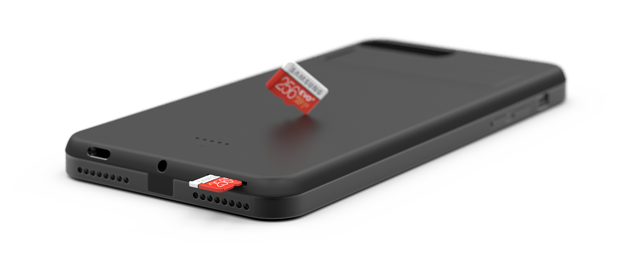
Fuze case for the iPhone 7 is similar, but without the memory expansion or kickstand https://hhg2tech.blogspot.com/2016/10/add-headphone-socket-to-your-iphone-7.html/ Sweet Case world's best iPhone 7 Plus case case extra battery flash memory audio jack kick stand kickstand slim case developed desired iPhone case protects your phone memory capacity HQ audio jack high quality audio jack 3.5 mm audio socket sound extra battery power back stand hands free case 4mm thick Sweet Case iPhone 7 iPhone 7 Plus iPhone 7+ thinnest protects iPhone microSD card Micro SD card slot Sweet Case external SD card slot memory expansion flash memory expansion more storage memory your phone storage more movies songs pictures apps iPhone additional capacity up to 256GB Sweet Case integrated card slot iPhone 256GB internal memory up to 512GB amazing storage managed Sweet Case app complete Sweet Case development production HQ audio jack Sweet Case produce high quality sound 24 bit sampling CD quality HQ audio jack delivers better performance lightning port card readers battery charger smartphones charge charging charged case internal battery power specs iPhone's internal battery Sweet Case pass through technology first charges your phone case transfers data phone computer while charging battery status checked 5 rear LEDs lights button Sweet Case app development slim and elegant design slim design designing developing Sweet Case thickness weight case iPhone 7 iPhone 7 Plus 7.1mm thick thickness Sweet Case slim and elegant design 4mm thick 1mm screen protection at the front /
Tesla’s Autopilot is not yet truly autonomous (but coming soon). It requires the person in the driver’s seat to keep hands on the wheel. If it detects non-compliance, it beeps warnings. What happens next?
If you look carefully at the 1:57 mark, the message at the bottom of the screen reads, “Autosteer Unavailable for the Rest of This Drive”./ Tesla updated radar camera ultrasonic sensors electric cars CEO Elon Musk new hardware's capabilities would lag behind cars on the street already Musk has projected Hardware 2.0 cars surpass older generation Hardware 1.0 vehicles fully self-driving 3 to 6 months news owners Hardware 2.0 cars rollout Autopilot features over-the-air updates over the air updates bringing those models closer functionality older-hardware cars full self-driving capability features enhanced autopilot features Elon Musk arrival Autopilot newer cars behind schedule series tweets Musk slow rollout Autopilot features camera calibration software update buyers Tesla cars built after October 2016 newly updated hardware start surpassing old hardware soon Musk's plan two-tiered Autopilot system Hardware 1 cars capable of running Autopilot Hardware 2 cars feature Enhanced Autopilot Hardware 2 cars offer a fully self-driving system Autopilot Hardware 2-equipped cars fully self-driving option installed half of their sensors enabled possibility running Autopilot two different sets of cars Musk goal driverless Enhanced Autopilot fully self-driving trip Los Angeles New York small delay Autopilot rollout Autosteer Autosteer /
Fing is a free smartphone app (iOS & Android) that lets you keep an eye on what’s happening on your WiFi network. It’s been around since 2009. Here’s a LifeHacker review from 2014:
Now Fing has been imbedded into a piece of hardware that can monitor your network 24/7, rather than whenever you think to take a look on you phone.
Because it’s permanently attached to your network, it can do a few things that aren’t practical with your phone, such as monitor 24/7, & produce logs.
Fingbox is an Indiegogo project. Funding has closed (over $US544,000 raised), so the backer project price is no longer available, but you can pre-order at the MSRP.
(Pssst – check out the “super secret discount”, which you can access in the free app.)
Update 10 April 2017 – “Super secret discount”, has been downgraded to, “secret discount” :(
Manufacturer’s web site https://www.fing.io// simple device secure troubleshoot your home network Fingbox tools keep your home network safe Wi-Fi working Fingbox secure and troubleshoot your home network controlled entirely within Fing app Fingbox alerts you senses anything out of the ordinary new devices on your network changes in your Internet performance unidentified devices unwelcome intruder find out who's home block devices make your Wi-Fi work Fing number 1 network scanner now in a box Fingbox evolution of the Fing app popular network scanner iOS Android 15 million users additional security troubleshooting features home network solution Fingbox block any device from accessing your network see what devices are hogging broadband find best Wi-Fi spots in your home when a family member gets home Fingbox designed able to work with any home network configuration simply plug it in Ethernet port your primary router no manual configuration needed Fing app developers Fing app superior device recognition ease of use network scanning technology app 15 million downloads 7 million active users positive reviews App Store Google Play iTunes Fingbox /
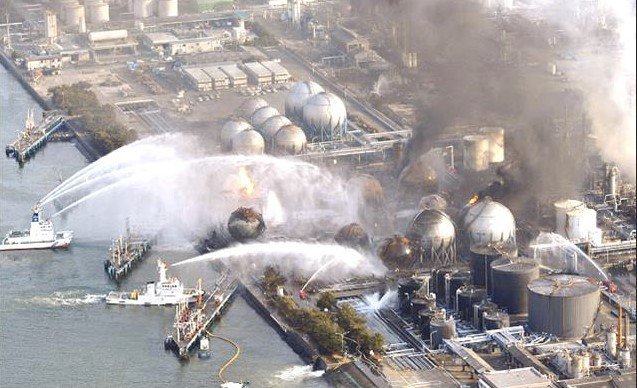
Sea water being pumped into the damaged reactor building at the Fukushima Daiichi plant in an attempt to cool the molten cores. Contaminated water escaped into the Pacific Ocean. Credit: peaceandjustice.org.uk/Twitter
Claims by vested interests, that no-one died as a result of the Fukushima melt down1,2 were given a new perspective with the discovery of radiation levels of at least 370 sieverts3 per hour.
To put that in perspective, 1 minute of exposure to such radiation would kill over 50 percent of the population. Even a radiation-hardened robot would have a projected operational lifetime of around 2 hours.
3Encyclopædia Britannica: “Sievert (Sv)”, https://www.britannica.com/technology/sievert/ image analysis two-meter hole metal grate under pressure vessel reactor No. 2 containment vessels Fukushima No. 1 nuclear power plant highest radiation reading since 3/11 detected Fukushima No. 1 reactor radiation level containment vessel reactor 2 crippled Fukushima No. 1 power plant reached maximum 530 sieverts per hour highest since the triple core meltdown March 2011 Tokyo Electric Power Co. Holdings Inc. blazing radiation reading taken near entrance space just below pressure vessel reactor core high figure indicates melted fuel escaped the pressure vessel 530 sieverts person could die from even brief exposure difficulties ahead government and Tepco grope dismantling all three reactors crippled March 2011 disaster Tepco analysis of images taken remote-controlled camera2-meter hole metal grating under pressure vessel reactor’s primary containment vessel grating is warped hole caused when the fuel escaped pressure vessel mega-quake massive tsunami triggered station blackout crippled plant’s ability cool the reactors searing radiation level described experts unimaginable far exceeds previous high 73 sieverts per hour reactor Tepco calculated figure analyzing electronic noise camera images caused by radiation estimation method margin of error plus or minus 30 percent official National Institute of Radiological Sciences medical professionals never considered dealing with this level of radiation 4 sieverts radiation exposure kill 1 in 2 people 1,000 millisieverts 1 sievert infertility loss of hair cataracts exposure doses above 100 millisieverts increases risk of cancer Tepco surface radiation inside normally operating pressure vessel several thousands sieverts per hour discovery difficulty removing fuel debris decommission plant government Tepco locate fuel start removing 2021 utility deploy remote-controlled robot check conditions inside containment vessel utility change its plan reconsider route robot takes into interior hole in the grating extraordinary level of radiation robot operate for less than two hours destroyed designed withstand exposure up to 1,000 sieverts calculation 73 sieverts per hour robot run for more than 10 hours 530 sieverts per hour rendered inoperable less than two hours /