Monday, 1 February 2016

When gut bacteria change brain function


Credit: Getty/The Guardian

Bacteria are everywhere. Not just the obvious places, like a piece of rotting fruit, or in soil, but on the window, the floor, your skin, inside your mouth, your digestive tract …

Bacteria are many times smaller than cells of the human body. Because of this, the 2 to 6 pounds (0.9 to 2.7 kilograms) of bacteria in the average human body1 outnumber human cells by around 10 to 1.2

So, with all these bacteria in our bodies, why aren’t we all ill? It turns out that many of these bacteria are harmless, & some of them actually have positive effects on our health. E.g. some bacteria in the large intestine convert vitamin K1 into vitamin K2.3

There is mounting evidence, that, in addition to affecting our physical health, some digestive-tract bacteria can influence mood & mental health.

http://www.theatlantic.com/health/archive/2015/06/gut-bacteria-on-the-brain/395918/

https://theconversation.com/gut-feeling-how-bacteria-can-mess-with-your-mood-17080

http://www.businessinsider.com.au/how-gut-bacteria-affect-the-brain-2015-7
__________

1 “NIH Human Microbiome Project defines normal bacterial makeup of the body”, https://www.nih.gov/news-events/news-releases/nih-human-microbiome-project-defines-normal-bacterial-makeup-body

2 “Human microbiota”, https://en.wikipedia.org/wiki/Human_microbiota

3 “Vitamin K”, https://en.wikipedia.org/wiki/Vitamin_K
/ gut bacteria changes brain function gut bacteria person’s health microbes influence digestion allergies metabolism diet optimum bacterial health microbes human brain researchers investigating microbiome bacterial ecosystem regulates how people think feel scientists found evidence thousand different species bacteria trillions of cells weigh between one and three pounds crucial role autism anxiety depression disorders connections between microbiome brain Emeran Mayer gastroenterologist University of California Los Angeles UCLA studying most intriguing work autism doctors parents researchers three-quarters of people with autism also have gastrointestinal abnormality digestive issues food allergies gluten sensitivity recognition scientists examine potential connections gut microbes autism several recent studies found autistic people microbiome differs significantly control groups California Institute of Technology microbiologist Sarkis Mazmanian focused common species Bacteroides fragilis smaller quantities some children autism paper published journal Cell Mazmanian colleagues fed B. fragilis humans mice symptoms similar to autism treatment altered makeup of the animals microbiome importantly improved behavior became less anxious communicated more other mice showed less repetitive behavior how microbes interact illness trigger shield mystery Mazmanian colleagues identified possible link chemical called 4-ethylphenylsulphate 4EPS produced gut bacteria mice symptoms autism blood levels 4EPS more than 40 times higher than other mice link between 4EPS levels brain isn’t clear animals injected compound developed autism-like symptoms reverse these ailments produces this compound symptoms disappear Mazmanian awarded MacArthur grant microbiome work potential breakthrough understanding how microbes contribute to autism neurodevelopmental disorders results adjusting gut bacteria viable treatment for the disease patients reverse ailments compound symptoms disappear mouse model scientists gathered evidence gut bacteria influence anxiety depression Stephen Collins gastroenterology researcher McMaster University Hamilton Ontario strains two bacteria lactobacillus bifidobacterium reduce anxiety-like behavior mice scientists anxiety mouse feeling humans carry strains bacteria guts study colleague collected gut bacteria strain of mice anxious behavior transplanted microbes another strain calm result tranquil animals become anxious microbes major players gut-brain axis John Cryan neuroscientist University College Cork Ireland examined effects depression in animals paper published Neuroscience bifidobacterium antidepressant Lexapro stressful situations test measured microbe drug both effective increasing animals perseverance reducing levels of hormones stress experiment lactobacillus similar results Cryan launching a study with humans measurements test gauge subjects’ response microbiome-based brain research mice studies involving humans Collins transferred gut bacteria anxious humans germ-free mice guts contained no bacteria after the transplant animals behaved more anxiously research has examined entire humans bugs paper published Psychopharmacology Oxford University neurobiologist Phil Burnet prebiotic group of carbohydrates provide sustenance for gut bacteria affected stress levels among group healthy volunteers subjects powdered carbohydrate galactooligosaccharide GOS placebo previous studies mice scientists carb fostered growth Lactobacillus Bifidobacteria mice microbes increased levels of several neurotransmitters affect anxiety brain-derived neurotrophic factor experiment subjects ingested GOS showed lower levels key stress hormone cortisol test words flashed quickly on a screen GOS group focused positive information negative test measure levels of anxiety depression conditions anxious depressed patients focus inordinately threatening negative stimuli Burnet colleagues results similar subjects take anti-depressants anti-anxiety medications human study Mayer UCLA researcher recruited 25 subjects healthy women cup of commercially available yogurt twice a day yogurt probiotic contains live bacteria strains four species bifidobacterium streptococcus lactococcus lactobacillus study subjects brain scans gauge response images facial expressions happiness sadness anger eating yogurt twice a day do something to your brain journal Gastroenterology yogurt eaters reacted more calmly images control group brain bacteria yogurt subjects’ gut microbes production of compounds modified brain chemistry microbiome alters the brain researchers microbes influence brain multiple mechanisms scientists gut bacteria produce neurotransmitters serotonin dopamine GABA play key role mood antidepressants increase levels compounds organisms people metabolize compounds regulating circulates blood brain gut bacteria neuroactive chemicals butyrate reduced anxiety depression Cryan microbes activate the vagus nerve gut brain microbiome immune system influences mood behavior interconnection bugs brain evolutionary perspective bacteria lived inside humans millions of years Cryan microbes developed shape hosts’ behavior for their own ends modifying mood microbial survival strategy happy people more social more social more chances microbes exchange spread scientists gut-brain microbial network hacked treat psychiatric disorders bacteria used Prozac Valium microbes eons experience modifying our brains pharmacological approaches fewer side effects microbes treat these disorders modulate brain function /

Sunday, 31 January 2016

Can fuel cells compete with batteries? – update


100kWh of electricity used to drive a vehicle via fuel cell compared with chemical battery. Fuel cell delivers only one third of the energy to the wheels.
Credit: Ulf Bossel/phys.org/Electrek

Many people find the idea of a hydrogen fuel cell vehicle (HFCV) very attractive. And there is no denying the attraction of a simple replacement of the rapid fueling of an internal combustion engine vehicle for the similar fueling time of a HFCV.

Unfortunately, outside of fast refueling, compared to battery electric vehicles (BEVs) it’s all disadvantages:

● There is almost no hydrogen fueling infrastructure.

● Over 95% of hydrogen is obtained by splitting from fossil fuel – so it is neither no-carbon, nor sustainable.

● Hydrogen can be produced from water using electricity – sustainably if sustainable electricity (hydro, solar, wind etc.) is used.

● Electricity used to drive a vehicle via a hydrogen fuel cell will provide one third of the energy to the wheels compared to the same amount of electricity powering a vehicle via a lithium ion battery. See the diagram at the top of this post.

● Hydrogen fuel cells produce electricity only slowly, so a fuel-cell-only vehicle would have unacceptably poor acceleration. Also, an HFC can’t be recharged using electricity, so regenerative braking doesn’t work, substantially reducing the efficiency of a fuel-cell-only vehicle. To overcome these problems, a conventional, rechargeable battery is fitted. The fuel cell charges the battery & the stored electricity is used to drive the vehicle. The battery also provides storage for regenerative braking. As a price control measure, plus all the space taken up by the fuel cell, hydrogen tank etc., the battery has to be small. A small battery can only release electricity relatively slowly. Faster than a fuel cell, but still slowly. As a result, performance is poor. E.g. the Toyota Mirai has been described as, “rather like a Prius, only quieter,” with “0-to-60-mph time of just under 10 seconds”. At $57,500 in USA, how big is the market for a car, which drives like a Prius, is responsible for almost as much CO2 & has almost no refueling infrastructure?


What about BEVs? Are they a viable solution to personal transport?

● While there is almost no hydrogen fueling infrastructure, electricity is available everywhere.

● All commercial BEVs are able to charge overnight on a domestic power point for a normal commute – other options include at work, while shopping for groceries etc.1

● Fast charging & range greater than 160 km (100 miles) are only necessary for long trips.

● Tesla’s luxury Model S combined with their Supercharger network for long trips (the other half of a BEV-based sustainable personal transport system) has shown how a sustainable personal transport system can work – leaving only the question of cost.

● A question which will be answered by GM’s Bolt 200 mile (320km) BEV which is expected to go on sale for between $30,000–$40,000 USD later this year. Although, without access to a fast-charging network necessary for long distance travel.

● Tesla has promised to show its similarly priced 200 mile BEV, the Model 3, in prototype form, in March 2016 – with access to Tesla’s fast-charging network.


Update – Tesla announced its Model 3, as promised, in March 2016.

Update – Chevrolet's Bolt went on sale in some states of USA in late 2016.

http://cleantechnica.com/2014/12/01/fuel-cell-economics-vs-batteries/

http://tonyseba.com/toyota-vs-tesla-can-hydrogen-fuel-cell-vehicles-compete-with-electric-vehicles/

http://evobsession.com/hydrogen-cars-vs-electric-cars-detailed-comparison-efficiency/

http://www.autoblog.com/2014/08/05/why-battery-electric-vehicles-will-beat-fuel-cells/

http://phys.org/news/2006-12-hydrogen-economy-doesnt.html
__________

1 An episode of Fully Charged included a Nissan Leaf owner who was not able to charge at home, but paid her employer for the electricity to charge at work – at a considerable saving compared to the petrol vehicle she previously owned – starts at the 4:20 mark:


/ BEV EV lithium ion LiIon battery charge recharge Supercharger Tesla Nissan Leaf range charge recharge fool cells /

Saturday, 30 January 2016

Is it the beginning of the end for the rear-ender?


Credit: wfla.com/

Self-driving cars are some way off, but in the meantime, systems which are already available provide improvements in safety. Automatic braking can reduce collisions by 40% & collision alerts can reduce them by 23%.

Even more importantly, automatic braking has been shown to reduce whiplash & other injuries by 45%.

http://www.mynrma.com.au/get-involved/advocacy/news/is-it-the-beginning-of-the-end-of-the-rear-ender.htm

http://www.forbes.com/sites/joannmuller/2015/09/11/carmakers-promise-to-put-automatic-braking-systems-in-every-car-to-prevent-crashes/#35e3d6096ebf

https://en.wikipedia.org/wiki/Automatic_braking
/ crash prevention technologies technology automatic braking collision warning proven greatly reduce incidence rear-end crashes subsequent injuries Insurance Institute for Highway Safety IIHS USA studied nationwide police data revealed automatic braking reduces collisions 40 per cent percent collision warning alerts 23 per cent automatic braking reduces whiplash associated injuries 45 per cent collision warning systems registered 6 percent improvement crash avoided systems autobrake good chance preventing injuries reducing impact speed study author IIHS research chief Jessica Cicchino surprise outcome study technologies most effective 65-75 km/h range 54 per cent reduction rear-enders 39 percent 55km/h or less 25 per cent speeds above 80km/h crash rates cars made by Volvo Honda Mercedes-Benz Subaru equipped prevention technologies similar models without safety features mandatory installation devices US USA sold vehicles IIHS National Highway Traffic Safety Administration agreed in principle carmakers make auto-braking standard all new models difficulty studying systems often packaged with other crash avoidance technologies cars study equipped crash prevention technologies also fitted adaptive cruise control tracks vehicles in front maintain safe distances theoretically contribute results cruise control manually activated auto-braking collision warning automatic lane departure warning safety packages factor avoiding rear-enders rear enders cars equipped collision avoidance systems Australian roads generate reliable local data most domestic insurers offer reduced premiums models equipped with the technology /

Friday, 29 January 2016

Health tracker for your guitar


Credit: Taylor Quality Guitars

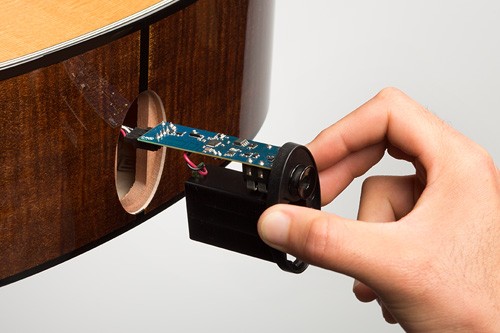
Humidity is critical to a musical instrument made of wood, both musically & mechanically. If humidity is too high, the instrument can warp. Too low & it can crack. In addition to humidity, the TaylorSense system monitors temperature, impacts & battery life.

An iOS app to monitor the parameters listed above, plus a digital guitar tuner, four track recorder, metronome & guitar care videos is promised for Q2 2016.

http://the-gadgeteer.com/2016/01/26/taylorsense-is-a-health-tracker-for-your-guitar/

https://www.taylorguitars.com/taylorsense
/ IoT Internet of Things activity trackers humans cars homes children pets TaylorSense guitar health monitor Taylor Guitars TaylorSense guitar health monitoring system check your instrument’s vital signs mobile app phone tablet iPod iPad iPhone iOS 8+ Taylor guitar 9V Expression System ES-T ES-N pickup TaylorSense complete replacement 9V system add-on monitor digital hygrometer tracks humidity levels acoustic instruments made of wood humidity too low instruments crack too high wood can warp TaylorSense app alert levels remain too high too low for extended period of time alerts include temperature fluctuations impact alerts battery life warnings humidity level sensor monitor humidity levels ukuleles generic sensor any brand of guitar ukulele other wooden instruments TaylorSense /

Wednesday, 27 January 2016

Invisible glass


Credit: Salon 24 http://arkadiusz.jadczyk.salon24.pl/

What happened to the end of the glass rod in the liquid? It’s invisible!

How?

To answer this question, it is first necessary to understand a few other things. First up: How do we see anything? One of three ways.

Mostly we see things by the light they reflect – light from the Sun, a desk lamp, whatever, falls on an object – your hand, shirt, desk etc. – light reflected from the object enters you eye & so you see it.

Some things we see because they emit their own light – Sun, stars, computer screen.

Transparent objects are a little bit different. What makes something “transparent” is that light passes right through it – so how can we see it at all?

Part of the answer is that light doesn’t actually “pass right through” – a small part of the light striking say, glass or water, is reflected.

Another part of the answer is that light doesn’t pass straight through a transparent object. As light moves from one transparent medium (e.g. air), into another transparent medium (e.g. glass), the light is bent. this is called refraction.


Light refracted as it passes from air into the transparent plastic block. As it passes from the plastic into the air again, it is refracted in the opposite direction. Note that as the beam leaves the clear plastic block, it is parallel with the beam entering the plastic.
Credit: Wikimedia Commons/

How does refraction work? As light passes from one medium to another, it changes velocity. E.g., as light travels from air into the plastic block, in the image above, it slows down & so changes direction. As it leaves the plastic block, it speeds up again & turns back to its original direction.

So why is the glass rod in the beaker at the top of this post invisible?

One more thing to understand before answering this question – How do we see the glass rod above the liquid? Refraction. As light passes from air to glass, is refracted. I.e. it slows down & changes direction. As light exits the glass it is refracted again in the opposite direction. This gives glass (or other transparent material) its unique appearance. It’s why a glass rod looks different from a steel rod or a pencil.

Finally – So why is the glass rod in the beaker at the top of this item invisible?

Because the velocity of light in the liquid is the same as the velocity of light in glass!

As light travels from the liquid (probably cooking oil) into the glass rod, it doesn’t change velocity, so it doesn’t change direction. Thus, light which passes through the glass rod is indistinguishable from light which misses it & passes only through the liquid. That is, the glass rod is invisible!


More about how to do it
http://www.exploratorium.edu/snacks/disappearing-glass-rods
/ refractive index index of refraction high dispersion glass low-dispersion glass refraction reflection optical medium velocity of light transparent invisible perspex polycarbonate transparent plastic /

Tuesday, 26 January 2016

Apple hires top virtual & augmented reality researcher


Professor Doug Bowman
Credit: Virginia Tech

Apple has hired Professor Doug Bowman, from Virginia Tech. Professor Bowman’s field is virtual reality, specifically, “... three-dimensional user interface design & the benefits of immersion in virtual environments.”

Apple has made a number of other acquisitions in the virtual reality field in recent years.

Watch this space.

http://9to5mac.com/2015/02/26/apple-display-projection-systems-for-virtual-reality/

http://www.techinsider.io/apple-hires-doug-bowman-vr-expert-2016-1

http://www.theverge.com/2016/1/22/10813740/apple-vr-expert-hire-doug-bowman-virginia-tech
/ discovered last year Apple hiring software engineers experience virtual reality gaming user interfaces new job listings Apple’s interest development hardware virtual reality Apple seeking Senior Display Systems Engineer display systems design development virtual reality VR environments Apple experience experienced monitor projection technologies extremely high fidelity VR environments job listing specify test novel display systems virtual environments work with vendors develop custom display solutions design select appropriate hardware software components optimize fidelity variety of VR environments develop software support displaying rendered image sequences display hardware software electrical mechanical engineers testing integration job listing posted Apple seeking Senior Display Software Engineer support graphics software engineering efforts VR environments engineer own display pipeline rendered image sequences display hardware experience motion capture systems acquisition PrimeSense Apple company sensor’s used in Microsoft’s Kinect Apple posted job listings application app engineers work on virtual reality augmented reality experiences Apple patent virtual reality headset products currently on the market Google’s recently launched Cardboard experiment Pinc Samsung’s Gear VR grant granted patent job listings app engineers experienced Oculus Rift VR hardware new job listings Apple developing hardware experience /

Monday, 25 January 2016

Robot can solve a Rubik's cube in one second


Notice that the centre square in each of the faces has been modified. Does this invalidate the result?
/ LEGO robot Rubik’s cube three seconds dedicated machine more flexible part list popular multi-coloured puzzle 1.019 seconds 1 second pair of guys YouTube Jay Flatland Paul Rose built their own mechanical solver array webcams 3D printed frames stepper motors software program image input cameras converts unrolled version human consumption solver understand robot wired function cameras priming lenses machine video three results: 1.196s, 1.047s smoking 1.019s official recognition breaking world record /